Massage Therapy
Massage therapy
People book massage therapy for pretty different reasons, and it's worth being upfront about that distinction from the start. Some people want an hour of genuine relaxation, a break from a stressful week, tight shoulders eased out, nothing more clinical than that. Others are dealing with a specific issue, chronic low back tightness, a shoulder that's been nagging since a fall last month, tension headaches that seem to start in the neck, and they want the massage to actually move the needle on that problem. Both are legitimate reasons to book, and at RehabDNA our registered massage therapists work with you either way, but it does change how the session is approached, so it's worth telling your therapist which one you're after before you start.
What actually happens in a session
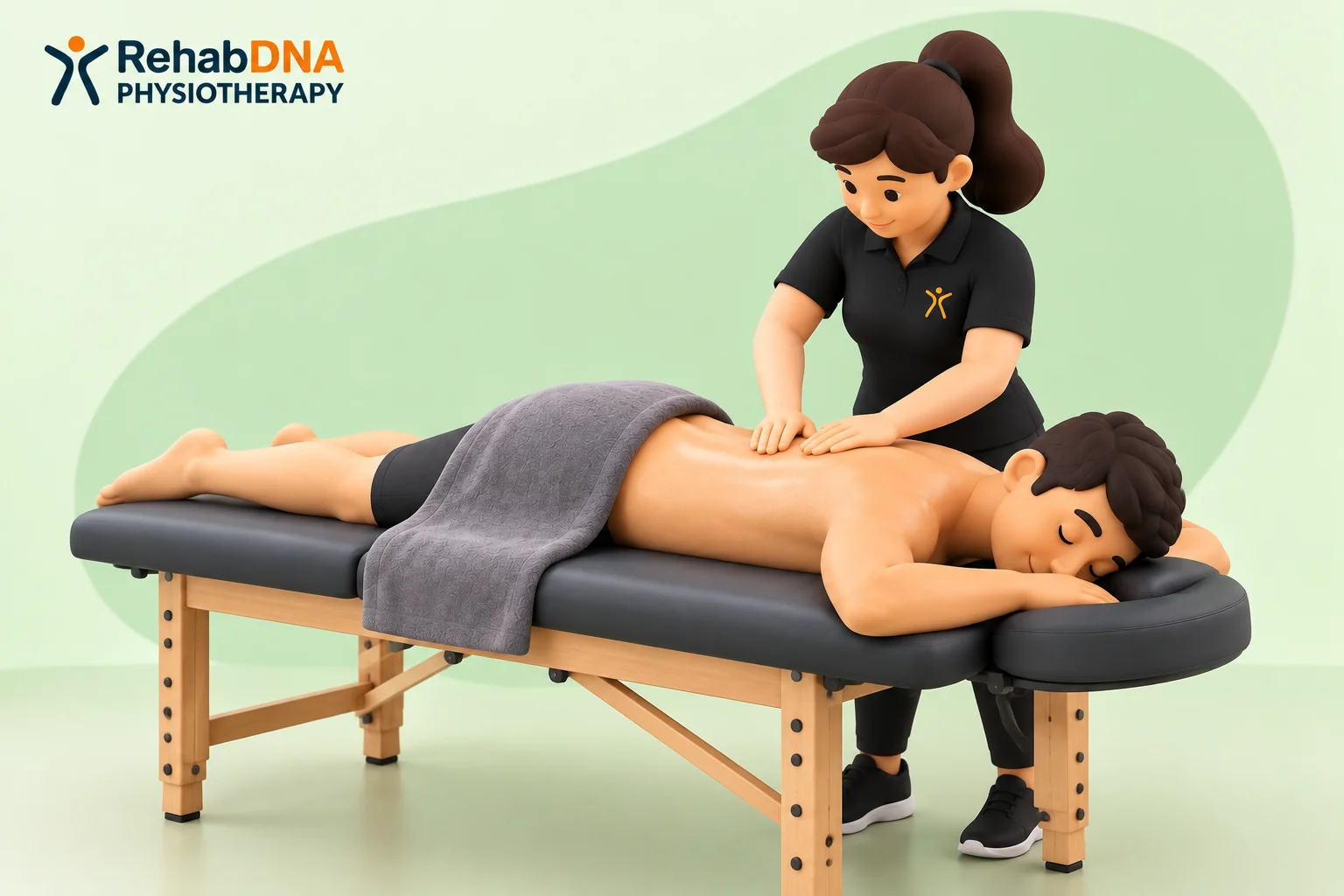
Massage therapy involves your therapist using their hands, and sometimes forearms or elbows for deeper work, to press, knead and manipulate the soft tissues of your body, muscle, connective tissue, tendons and skin. Most sessions begin with a short conversation about what you’re hoping to get out of it, any areas that are bothering you, and how much pressure you prefer, since that varies a lot from person to person. From there you’ll usually be face down or face up on a padded table, appropriately draped, while your therapist works through the areas discussed. A typical session runs somewhere between thirty minutes and an hour, sometimes longer for a full body treatment.
The main techniques we use
Swedish massage is the foundation most other techniques build on, using long gliding strokes, kneading, and lighter rhythmic tapping through the upper layers of muscle. It’s genuinely relaxing, but it also does real physiological work, easing muscle tension and improving local circulation, and it’s often where a session starts even when deeper work follows.
Deep tissue massage goes further into the muscle and connective tissue, using slower, more deliberate pressure to work through the kind of chronic tension and stiff, stuck spots that Swedish technique alone won’t fully reach. It tends to be the go-to for longstanding tight areas, old injury sites, or muscles that have been guarded and tense for a long time.
Trigger point therapy targets specific tight bands within a muscle, often called knots, that can refer pain to a completely different part of the body. Pressing directly into one of these points, holding it, and working it through is a fairly precise technique, and it’s often what actually resolves a pain pattern that seemed to be coming from somewhere else entirely.
Myofascial release focuses on the fascia, the connective tissue web that wraps around and links your muscles, organs and skeletal structures. When fascia gets restricted, from injury, poor posture, or just repetitive strain over time, it can limit movement and contribute to pain in ways that don’t always show up clearly elsewhere. This technique uses slower, sustained pressure to encourage that tissue to loosen and move more freely again.
Sports massage borrows from several of the above but is applied with an athlete’s training and competition schedule in mind, sometimes used before an event to prepare muscles, sometimes after to support recovery, and sometimes as part of an ongoing plan to manage the repetitive strain that comes with a particular sport.
Being honest about what the research shows
Massage therapy has a reasonably solid, if modest, evidence base for certain kinds of pain. Reviews of the research consistently find that massage can reduce pain and improve function for low back pain and neck pain in the short term, and there’s evidence supporting its use for knee osteoarthritis pain and tension headaches as well. Where the evidence is more consistent is on the timeframe: the benefits tend to be clearest in the days and weeks following treatment rather than as a long-lasting fix on their own. This is exactly why we don’t typically recommend massage as a standalone treatment for a persistent problem. Combined with an exercise-based plan, which is what actually builds the strength and movement capacity to keep a problem from coming back, massage tends to be far more effective at producing results that last, rather than needing a repeat session every few weeks indefinitely.
Clinical massage versus relaxation massage
It’s worth knowing there’s a real difference between a wellness-focused massage you might get at a spa and the more targeted, condition-specific massage provided in a clinical setting like ours. Clinical massage is generally more focused, working specific areas related to an actual issue rather than a full-body relaxation routine, and it’s more likely to be integrated with your broader physiotherapy or chiropractic plan rather than being a standalone experience. Both have real value, and if what you actually want is an hour to decompress, that’s a completely valid reason to book, just let your therapist know that’s the goal.
Related reading: Physiotherapy in Newmarket | Physiotherapy for Sciatica | Neck Pain and Headache Physiotherapy | Physiotherapy for Osteoarthritis
Safety and when to hold off
Massage is a low-risk treatment for the large majority of people, but there are situations where it should be avoided or approached with real caution, and a good intake conversation is how these get caught before treatment starts. These include active fever or infection, open wounds or significant skin conditions in the area being treated, a recent fracture, a known blood clot or deep vein thrombosis, uncontrolled bleeding disorders, and cancer in or near the area being worked on. None of these mean massage is off the table entirely, in many cases it just means avoiding a specific area or adjusting technique, but it’s important information for your therapist to have before you start.
It’s also normal to feel a little sore or fatigued for a day or so after a deeper session, similar to how you might feel after a solid workout. This usually settles on its own within a day or two.
Related reading: Physiotherapy in Newmarket
Getting started Physiotherapy
Whether you’re looking for help with a specific pain pattern or simply need a proper reset, the best way to get the most out of a session is telling your therapist exactly what you’re hoping for at the start. You can book directly online, and registered massage therapy is covered by most extended health insurance plans, with direct billing available for most providers so you’re not paying out of pocket and claiming it back separately.

Is registered massage therapy covered by insurance in Ontario?
Most extended health insurance plans cover registered massage therapy from an RMT, often without needing a doctor’s referral, though some plans do require one. It’s worth checking your specific plan, and we offer direct billing for most providers.
How is deep tissue massage different from a regular massage?
Regular Swedish massage works the upper layers of muscle with lighter, flowing strokes and is generally more relaxation focused. Deep tissue massage uses slower, more deliberate pressure to reach deeper muscle and connective tissue, and it’s often better suited to chronic tension or longstanding tight areas, though it can also be more intense.
Will massage alone fix my chronic back or neck pain?
It can genuinely help reduce pain and improve function in the short term, but the research is fairly consistent that those benefits are more reliable when massage is combined with an exercise-based plan rather than used entirely on its own. We’re happy to build both into your care plan together.
How often should I get a massage?
This depends entirely on why you’re coming in. Someone managing a specific chronic issue alongside physiotherapy might benefit from more frequent sessions initially, tapering off as things improve, while someone booking purely for relaxation might come in whenever they feel the need. Your therapist can help you figure out a reasonable schedule.
Are there reasons I shouldn’t get a massage right now?
Active fever or infection, a recent fracture, a known blood clot, uncontrolled bleeding disorders, and cancer near the treatment area are all reasons to hold off or adjust the session. Let your therapist know about any of these at booking or intake so the session can be planned safely.