Acupuncture in Newmarket
Acupuncture
Acupuncture is one of those treatments patients ask about with a mix of curiosity and skepticism, and honestly, that's a reasonable response. It's an old practice, it comes from a completely different medical tradition than the one most of us grew up with, and the explanations for how it works don't always sound like something out of a biology textbook. We think the honest way to talk about it is to explain both sides plainly, what the traditional theory says, what modern research actually shows, and where it tends to fit well as part of a broader treatment plan.
Where it comes from
Acupuncture originated in traditional Chinese medicine, where it’s explained through the idea of qi, a life force believed to flow through pathways in the body called meridians. Inserting fine needles at specific points along those meridians is meant to correct imbalances in that flow. That’s the traditional explanation, and it’s still how many practitioners frame their approach, blending it with a Western understanding of anatomy.
How we explain it in a modern clinical setting
Most practitioners working in a healthcare setting today, ourselves included, lean more on the Western medical explanation. The needles stimulate sensory nerves, muscle tissue and connective tissue at the insertion site. That stimulation appears to affect how pain signals are processed in the nervous system, and it seems to prompt the release of the body’s own natural pain-relieving chemicals, including endorphins. It also tends to increase local blood flow to the treated area. We’ll be straightforward with you here: exactly how much of the benefit people experience comes from these physiological effects versus other factors, including the simple ritual of treatment itself, is still genuinely debated in the research. What we can tell you from experience is that a meaningful number of our patients find it helps, particularly as one part of a broader plan rather than a treatment on its own.
What the research actually shows
This is worth being upfront about rather than glossing over. Acupuncture has been studied extensively, and the picture that comes out of that research is mixed rather than clear cut. There’s reasonably consistent evidence that acupuncture can help with certain kinds of pain, including chronic low back and neck pain, osteoarthritis and knee pain, and tension headaches or migraines, with some reviews showing the benefit lasting up to a year after treatment ends for most of these conditions. At the same time, well-designed studies that compare real acupuncture against sham acupuncture, meaning needling at the wrong points or not actually penetrating the skin, often find smaller differences between the two than you’d expect if the traditional meridian theory were the full explanation. Medicare in the United States covers acupuncture specifically for chronic low back pain based on this evidence, which gives you a sense of where the research is considered strongest. We’re not going to promise acupuncture will fix a specific problem, because the honest answer is that response varies quite a bit from person to person. What we can say is that it’s a low-risk option worth trying alongside other treatment, particularly for pain that hasn’t responded fully to other approaches on their own.
What a session actually involves
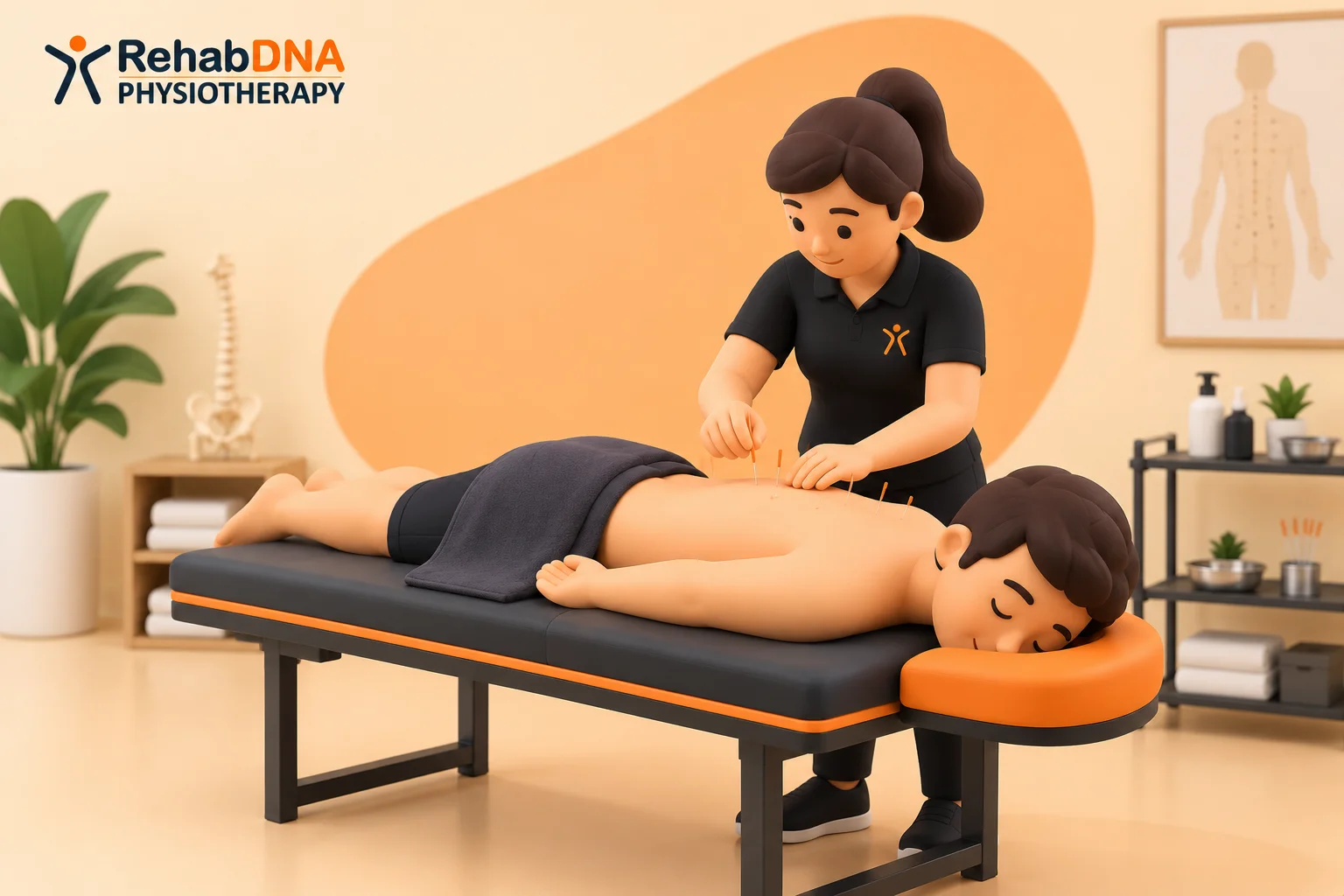
Your first visit starts with a conversation about what’s going on, your health history and what you’re hoping to get out of treatment. From there, very thin, sterile, single-use needles are inserted at specific points, sometimes right at the site of your pain and sometimes at points further away that are believed to influence that area. Most people feel very little on insertion, maybe a brief pinch or a dull, heavy sensation once the needle is in place, which is generally a sign the treatment is doing what it’s meant to. The needles typically stay in place for somewhere between ten and twenty minutes while you lie still and relax. Some practitioners will also apply gentle heat or a mild electrical current to the needles, called electroacupuncture, depending on what’s being treated.
A single session usually isn’t enough to judge whether acupuncture is helping you. Most treatment plans involve one or two sessions a week for several weeks, with the total number depending on your specific condition and how you’re responding. If you haven’t noticed any change after five or six sessions, that’s a reasonable point to reassess whether it’s the right fit for you.
Is Acupuncture safe ?
When it’s performed by a properly trained practitioner using sterile, single-use needles, which is now the standard of practice, acupuncture is considered a low-risk treatment. The most common side effects are minor, some soreness, light bruising or a small amount of bleeding at the needle site. Serious complications are rare and are almost always linked to poor technique or unsterile equipment rather than the treatment itself, which is exactly why practitioner training and credentials matter. There are a few situations where we’ll want to know more before proceeding, including if you have a pacemaker, since electrical stimulation of the needles could theoretically interfere with it, if you’re pregnant, since certain points are avoided during pregnancy, or if you’re on blood thinners or have a bleeding disorder. None of these automatically rule acupuncture out, but they’re worth mentioning at your first visit.
Acupuncture versus dry needling
People sometimes assume these are the same thing because both involve thin needles, but they come from different traditions and different training. Acupuncture is rooted in traditional Chinese medicine and focuses on the broader meridian system. Dry needling is a technique some physiotherapists use, based on Western anatomy and trigger point theory, targeting specific tight bands of muscle directly. If you’re not sure which is the better fit for what you’re dealing with, that’s a completely reasonable thing to ask about at your assessment.
What we commonly use it for
In our clinic, acupuncture tends to come up most often as part of a plan for chronic low back and neck pain, osteoarthritis and knee pain, tension headaches and migraines, and some sports injuries where pain is limiting how well someone can engage in the more active parts of their rehab. It’s rarely the only thing we’re doing. It tends to work best alongside manual therapy and an exercise-based plan, not as a replacement for either.
Related reading: Physiotherapy in Newmarket
Getting started Physiotherapy
If you’re curious whether acupuncture might help with what you’re dealing with, the best next step is a conversation with your practitioner about whether it makes sense as part of your specific plan. You can book directly online, and depending on your extended health plan, acupuncture is often eligible for direct billing, though coverage varies more between insurers for acupuncture than it does for physiotherapy, so it’s worth checking your specific plan.

Does acupuncture hurt?
Most people feel very little, sometimes a brief pinch on insertion and a dull, heavy sensation once the needle is in place. The needles are much thinner than a standard medical needle, and most people find it far more comfortable than they expect.
How many sessions will I need?
This depends on your condition and how you respond. Most plans involve one or two sessions a week for several weeks. It’s reasonable to expect five or six sessions before you have a good sense of whether it’s helping.
Is acupuncture backed by scientific evidence?
The evidence is genuinely mixed. There’s reasonable support for its use in certain kinds of pain, including low back pain, neck pain, osteoarthritis and headaches, though some well-controlled studies find smaller effects than the traditional theory would predict. We treat it as a low-risk option worth trying as part of a broader plan, not a guaranteed fix on its own.
Is acupuncture covered by insurance?
Coverage varies significantly between insurance providers, more so than for physiotherapy. Some plans cover it fully, some partially, and some not at all. It’s worth checking your specific plan before booking, and our front desk can help confirm what direct billing options are available.
What’s the difference between acupuncture and dry needling?
Both use thin needles, but acupuncture is based on traditional Chinese medicine and the meridian system, while dry needling is a Western technique, often used by physiotherapists, that targets specific muscle trigger points directly. They’re suited to somewhat different situations.