Sports Injury Physiotherapy
Your body pain can affect how you move, work, exercise, sleep, and manage everyday activities. At RehabDNA Physiotherapy in Newmarket, we provide personalized pain physiotherapy and rehabilitation to help you understand your pain, improve movement, build strength, and work toward better function.


Sports Injury Physiotherapy Newmarket & Sports Rehabilitation
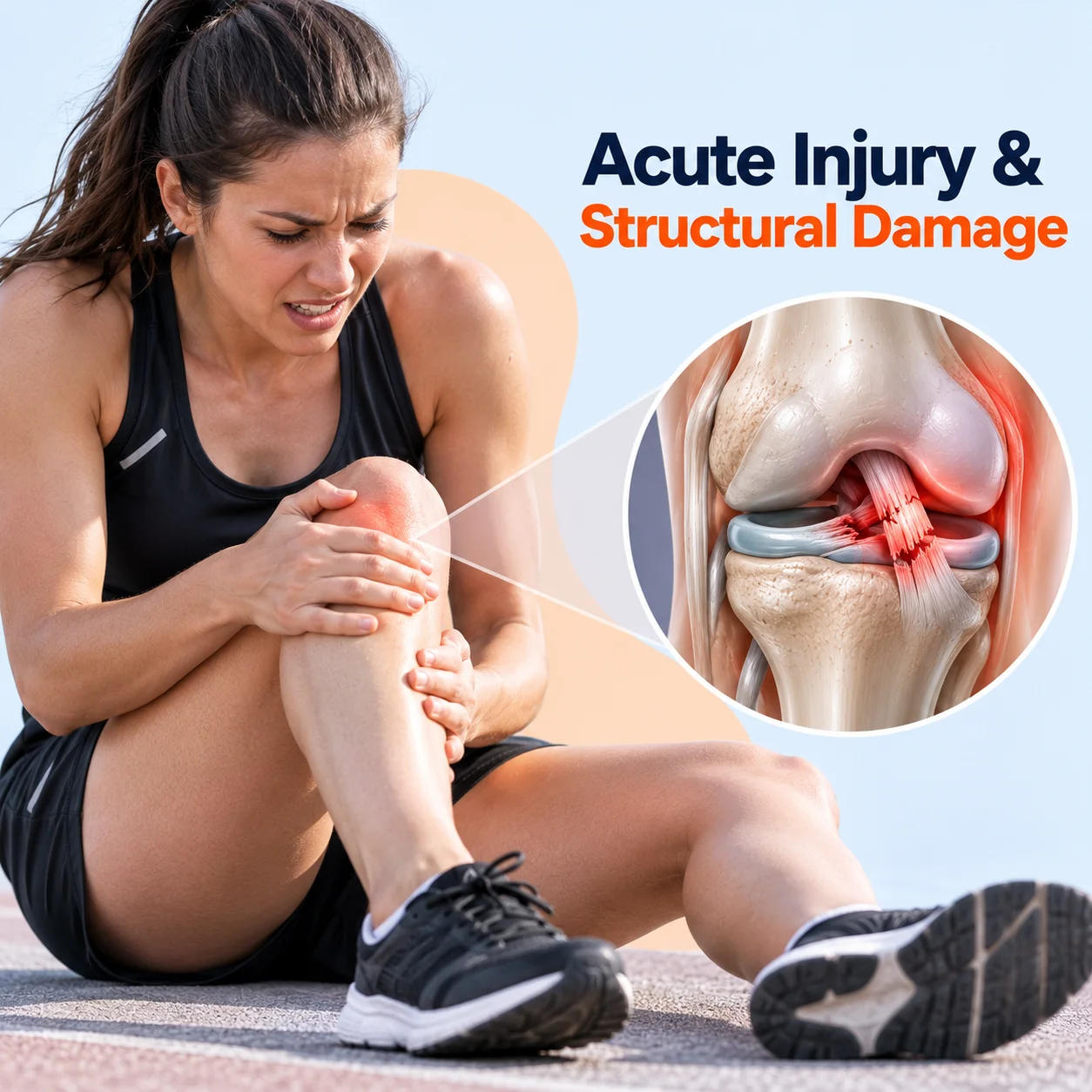
Sports injuries can interrupt training, competition, exercise, work, and everyday activities. Whether you are dealing with a muscle strain, ligament injury, tendon problem, joint injury, or recovering after surgery, rehabilitation can help you progressively restore movement, strength, coordination, and function.
At RehabDNA Physiotherapy in Newmarket, sports rehabilitation is built around assessment, individualized treatment, therapeutic exercise, movement training, and progressive return to activity. Our approach is adapted to your injury, current abilities, sport or activity, and rehabilitation goals.
Sports Injury Physiotherapy & Rehabilitation in Newmarket
Sports Injury Physiotherapy & Rehabilitation in Newmarket
Sports injuries can interrupt training, competition, exercise, work, and everyday activities. Whether you are dealing with a muscle strain, ligament injury, tendon problem, joint injury, or recovering after surgery, rehabilitation can help you progressively restore movement, strength, coordination, and function.
At RehabDNA Physiotherapy in Newmarket, sports rehabilitation is built around assessment, individualized treatment, therapeutic exercise, movement training, and progressive return to activity. Our approach is adapted to your injury, current abilities, sport or activity, and rehabilitation goals.
What Is Sports Injury Rehabilitation?
Sports injury rehabilitation is a structured process that helps athletes and active individuals recover after an injury and progressively return to their desired activities.
Depending on the injury, rehabilitation may address:
- Pain and symptoms
- Joint mobility
- Muscle strength
- Flexibility
- Balance and coordination
- Movement control
- Exercise tolerance
- Sport-specific demands
- Functional performance
- Return to training and competition
The rehabilitation process varies depending on the type and severity of the injury, previous injuries, current physical abilities, and activity requirements.
Sports Injury Physiotherapy in Newmarket
Sports physiotherapy can be appropriate for athletes, recreational exercisers, runners, gym users, and other active individuals.
Common sports-related problems may include:
- Muscle strains
- Ligament sprains
- Tendon injuries
- Knee injuries
- Shoulder injuries
- Ankle injuries
- Hip injuries
- Back and neck injuries
- Overuse injuries
- Running-related injuries
- Post-surgical rehabilitation
- Movement and performance limitations
Your physiotherapist can assess the injury and develop a rehabilitation plan around your specific requirements.
Physiotherapy for Acute Muscle Strains & Sprains
Muscle strains and ligament sprains can occur during running, jumping, lifting, changing direction, or contact activities.
Rehabilitation may focus on:
- Managing symptoms
- Restoring mobility
- Gradually rebuilding strength
- Improving movement control
- Reintroducing sport-specific activities
- Progressively increasing training demands
The progression should be appropriate to the injury and your recovery.
Rotator Cuff Injury Rehabilitation
Rotator cuff problems can affect athletes and active individuals involved in activities that place repeated demands on the shoulder.
Rehabilitation may address:
- Shoulder mobility
- Rotator cuff strength
- Shoulder-blade control
- Upper-limb movement
- Exercise tolerance
- Sport-specific demands
Rotator Cuff Tear Rehab Exercises
There is no single set of rotator cuff tear rehab exercises suitable for every injury.
Exercise selection depends on factors such as the type and severity of the injury, treatment history, current strength, pain, mobility, and functional requirements.
A physiotherapy assessment can help determine an appropriate progressive exercise program.
Hamstring Strain Rehabilitation
Hamstring strains are common in running and sports that involve sprinting, acceleration, jumping, or rapid changes in speed.
Rehabilitation may include:
- Gradual loading
- Hamstring strengthening
- Hip and lower-limb strengthening
- Movement control
- Running progression
- Sport-specific drills
- Progressive return to training
Hamstring Strain Recovery Time
Hamstring strain recovery time varies considerably.
The timeline depends on the severity and location of the injury, symptoms, previous injury history, strength, activity requirements, and response to rehabilitation.
Rather than relying only on a fixed number of days or weeks, rehabilitation should be progressed according to appropriate functional milestones.
Shin Splints and Running Injuries
Running-related lower-leg pain can interfere with training and performance.
Shin splints treatment physical therapy may involve assessing:
- Training load
- Running activity
- Lower-limb strength
- Mobility
- Movement patterns
- Foot and ankle function
- Recovery habits
Rehabilitation can then be tailored to the individual’s symptoms and activity requirements.
Running Injury Physiotherapy in Newmarket
Running injuries can develop following changes in mileage, intensity, terrain, training frequency, footwear, or other factors.
A running injury physiotherapy assessment may consider:
- Current training volume
- Recent changes in training
- Pain location and behavior
- Lower-limb strength
- Mobility
- Balance
- Running-related movement
- Previous injuries
- Return-to-running goals
Rehabilitation can then be progressively adjusted as your tolerance improves.
Tennis Elbow and Overuse Injuries
Tennis elbow and other overuse injuries can develop from repetitive loading rather than a single traumatic event.
Physiotherapy may include:
- Activity assessment
- Strength testing
- Progressive loading
- Mobility exercises
- Movement modification
- Functional rehabilitation
- Gradual return to sport or work
Tennis Elbow Physical Therapy Exercises
Exercises for tennis elbow should be selected according to the person’s symptoms, strength, activity requirements, and stage of rehabilitation.
Progressive strengthening and loading can form an important part of rehabilitation when appropriate.
ACL Injury Rehabilitation
ACL injuries can significantly affect knee stability and sports participation.
Rehabilitation following an ACL injury or surgery may focus on:
- Knee mobility
- Swelling and symptom management
- Quadriceps and lower-limb strength
- Balance and proprioception
- Movement control
- Running progression
- Jumping and landing
- Change-of-direction activities
- Sport-specific preparation
Post-surgical rehabilitation should follow the appropriate surgical and medical guidance.
Post-Surgical Sports Rehabilitation
Returning to sport after surgery requires a structured and progressive rehabilitation process.
Depending on the procedure, rehabilitation may address:
- Mobility
- Strength
- Stability
- Balance
- Coordination
- Functional movement
- Exercise tolerance
- Sport-specific skills
Examples may include rehabilitation following selected knee, shoulder, tendon, or other orthopaedic procedures.
Your rehabilitation program should follow the appropriate surgical protocol and clinical guidance.
Sports Concussion Rehabilitation
Concussion is a medical condition that requires appropriate assessment and management.
If physiotherapy is part of your recovery, rehabilitation may address appropriate physical, balance, vestibular, or functional concerns within the physiotherapist’s scope and according to medical guidance.
Persistent, worsening, or concerning concussion symptoms require appropriate medical assessment.
Sports Physiotherapy for Ankle Injuries
Ankle injuries are common in running, jumping, court sports, field sports, and activities involving rapid changes of direction.
Rehabilitation may address:
- Ankle mobility
- Strength
- Balance
- Stability
- Coordination
- Running
- Jumping
- Landing
- Sport-specific movement
Progressive rehabilitation can help prepare an athlete for the physical demands of their activity.
Sports Physiotherapy for Shoulder Injuries
Shoulder injuries can affect throwing, lifting, swimming, racquet sports, contact sports, and gym activities.
Rehabilitation may focus on:
- Shoulder mobility
- Rotator cuff strength
- Scapular control
- Upper-limb strength
- Movement coordination
- Sport-specific loading
Sports Physiotherapy for Knee Injuries
Knee injuries can affect running, jumping, squatting, cutting, and other athletic activities.
Rehabilitation may include:
- Knee mobility
- Lower-limb strengthening
- Balance and stability
- Movement retraining
- Running progression
- Jumping and landing
- Sport-specific exercises
Athletic Injury Treatment
Athletic injury treatment begins with understanding the injury and how it affects your movement and activity.
Your physiotherapist may assess:
- Injury history
- Symptoms
- Mobility
- Strength
- Balance
- Coordination
- Functional movement
- Training demands
- Sport-specific requirements
The findings help guide your rehabilitation plan.
Muscle Recovery Therapy
Recovery from a sports injury involves more than simply waiting for symptoms to settle.
Depending on your condition, rehabilitation may include therapeutic exercise, mobility work, progressive strengthening, education, movement training, and appropriate activity modification.
The goal is to progressively restore the physical capacity required for your everyday and sporting activities.
Strength and Conditioning for Rehabilitation
Strength and conditioning can form an important part of sports rehabilitation.
Depending on your needs, training may address:
- Muscle strength
- Endurance
- Power
- Balance
- Stability
- Coordination
- Movement control
- Sport-specific physical demands
Exercise should be progressed according to your current abilities and rehabilitation stage.
Functional Movement Training
Sport requires more than isolated muscle strength.
Functional rehabilitation can incorporate movements relevant to your activity, such as:
- Squatting
- Lunging
- Running
- Jumping
- Landing
- Cutting
- Acceleration
- Deceleration
- Lifting
These activities can be progressively introduced according to your injury and rehabilitation stage.
Return to Sport Rehabilitation
Returning to sport should be a progressive process rather than simply waiting until pain disappears.
Your rehabilitation may progress through:
Mobility → Strength → Stability → Functional Movement → Running → Sport-Specific Training → Return to Sport
The appropriate progression depends on the injury, treatment history, physical requirements, and individual goals.
Injury Prevention and Performance
Sports rehabilitation can also provide an opportunity to identify modifiable factors that may contribute to injury risk.
Depending on the athlete and sport, rehabilitation may address:
- Strength deficits
- Mobility limitations
- Balance
- Movement control
- Training progression
- Exercise technique
- Sport-specific demands
No rehabilitation program can guarantee prevention of future injury, but appropriate preparation can help address relevant physical and movement factors.
Personalized Sports Rehabilitation Care
At RehabDNA, your rehabilitation plan is based on your:
- Injury
- Symptoms
- Current physical abilities
- Activity level
- Sport
- Training demands
- Previous injuries
- Personal goals
Your progress can be reviewed regularly, allowing exercises and activities to be adjusted as your abilities change.
Our Sports Injury Rehabilitation Process
Assess
We begin by understanding your injury, symptoms, activity, training, and goals.
Identify
Your physiotherapist assesses relevant mobility, strength, balance, movement, and functional limitations.
Plan
A personalized rehabilitation plan is developed according to your injury and activity requirements.
Treat
Treatment may include therapeutic exercise, manual therapy, mobility work, education, and movement rehabilitation where appropriate.
Progress
Your rehabilitation is progressively adjusted as your strength, mobility, tolerance, and function improve.
Return
The goal is to help you progressively return to your desired activities, training, work, or sport.
Experienced Sports Physiotherapy Background
Rakesh Choudhary is a Registered Physiotherapist with a Master’s degree in Sports Physiotherapy.
His documented professional experience includes sports physiotherapy, rehabilitation, clinical physiotherapy, long-term care, and academic teaching. His sports physiotherapy experience includes work with athletes, where his responsibilities included sports and musculoskeletal injury assessment and treatment, rehabilitation, fitness assessment, exercise and conditioning, injury prevention, strapping and taping, manual therapy, and work alongside coaches, trainers, and other professionals.
His professional background also includes work with national and international-level athletes and experience in sports-related rehabilitation and performance preparation.
Sakshi Gaur is a Registered Physiotherapist with more than 10 years of clinical and academic experience and a Master’s degree in Sports Physiotherapy.
Her documented experience includes sports physiotherapy at the Sports Authority of India, where she worked with national and international players and was involved in sports-specific injury assessment and treatment, rehabilitation, fitness assessment, injury prevention, manual therapy, exercise, and collaboration with coaches and other professionals.
This sports physiotherapy background provides a strong foundation for understanding the physical demands associated with athletic rehabilitation.
Sports Physiotherapy for Athletes and Active Individuals
Sports rehabilitation is not limited to professional athletes.
Our approach can be relevant to:
- Recreational athletes
- Runners
- Gym users
- Fitness enthusiasts
- Amateur sports players
- Competitive athletes
- Active adults
- People returning to exercise after injury
Your rehabilitation plan is based on your individual activity level rather than simply your athletic status.
Sports Injury Rehabilitation in Newmarket
RehabDNA Physiotherapy provides personalized sports physiotherapy and rehabilitation in Newmarket, Ontario.
RehabDNA Physiotherapy
455 Harry Walker Pkwy S Unit 7
Newmarket, ON L3Y 8T3
Canada
Phone: +1 (905) 509 8469
Email: Info@RehabDNA.com
Why Choose RehabDNA for Sports Rehabilitation?
Sports Physiotherapy Experience
Our physiotherapists have documented academic and clinical backgrounds in sports physiotherapy and rehabilitation.
Personalized Rehabilitation
Your program is developed around your injury, physical abilities, sport, activity, and goals.
Exercise-Based Recovery
Progressive exercise can address strength, mobility, stability, coordination, and functional capacity.
Movement-Focused Rehabilitation
We consider how your injury affects movement and the activities you want to return to.
Progressive Return to Activity
Your rehabilitation can progress from basic movement and strengthening toward increasingly demanding functional and sport-specific activities.
455 Harry Walker Pkwy S Unit7, Newmarket, ON L3Y 8T3, Canada, Telephone +1(905) 509 – 8469