Pelvic Floor Physiotherapy
Your body pain can affect how you move, work, exercise, sleep, and manage everyday activities. At RehabDNA Physiotherapy in Newmarket, we provide personalized pain physiotherapy and rehabilitation to help you understand your pain, improve movement, build strength, and work toward better function.
Pelvic Floor Physiotherapy Newmarket
Pelvic floor concerns can affect bladder and bowel function, pelvic comfort, movement, pregnancy, recovery after childbirth, exercise, and everyday life. These concerns can sometimes be difficult to discuss, but you do not have to manage them without professional support.
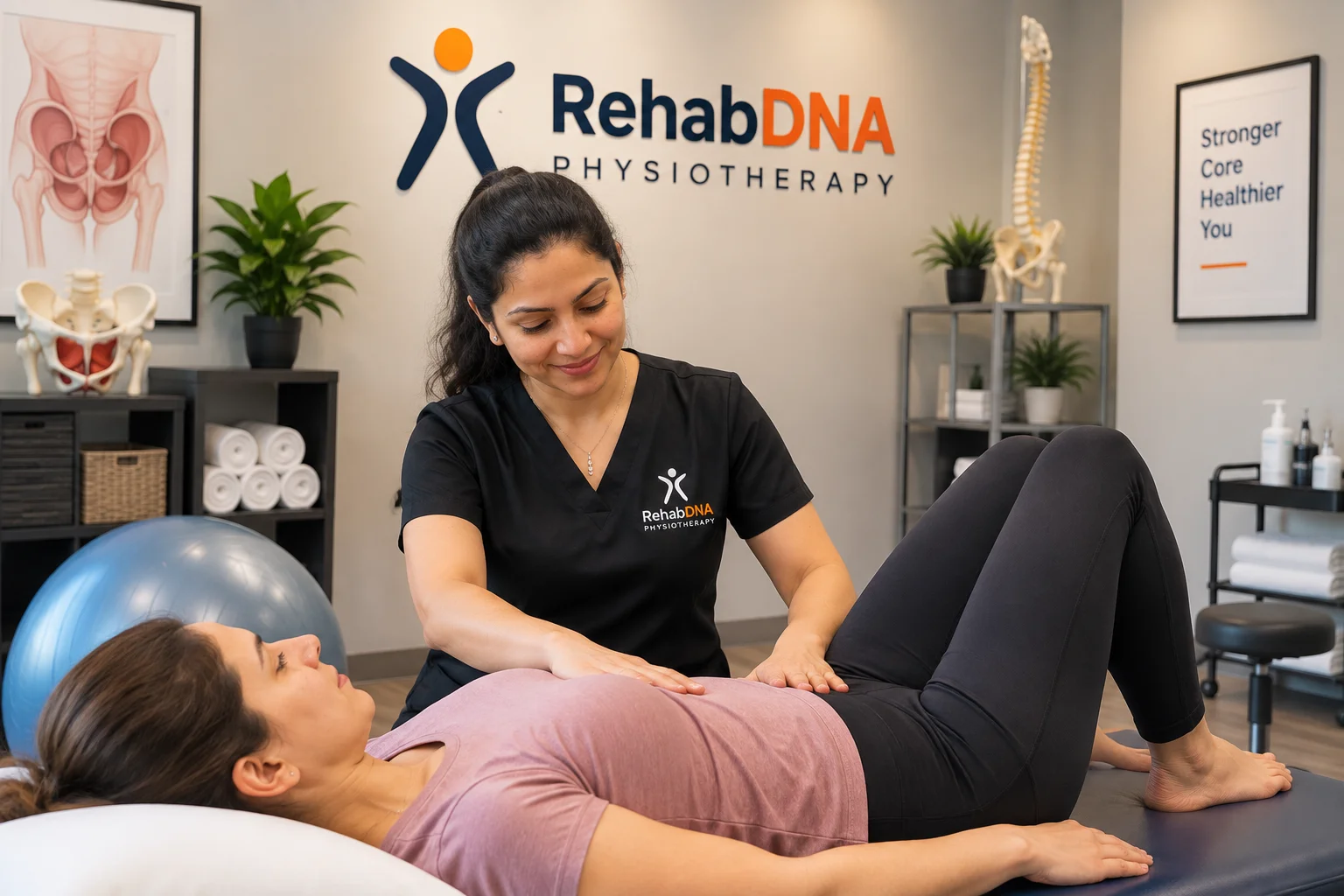
At RehabDNA Physiotherapy in Newmarket, pelvic floor physiotherapy can provide individualized assessment and rehabilitation for appropriate pelvic health concerns. Your physiotherapist will take the time to understand your symptoms, health history, activities, concerns, and goals before developing a personalized treatment plan.
Understand Pelvic Floor Physiotherapy
What Is Pelvic Floor Physiotherapy?
The pelvic floor is a group of muscles and connective tissues that support the pelvic region and contribute to bladder and bowel control, pelvic stability, and other aspects of pelvic function.
Pelvic floor physiotherapy focuses on understanding how the pelvic floor and surrounding areas are functioning and addressing problems that may affect movement, comfort, strength, coordination, or everyday activities.
Depending on your individual needs, rehabilitation may involve pelvic floor exercises, breathing and coordination exercises, core rehabilitation, mobility work, strengthening, education, movement retraining, and other physiotherapy approaches.
Not every pelvic floor problem requires strengthening. Some people may have difficulty relaxing or coordinating the pelvic floor muscles, so treatment should be based on an individualized assessment rather than a generic exercise program.
Pelvic Floor Physiotherapy in Newmarket for Women’s Health
Pelvic floor physiotherapy can be relevant during different stages of a woman’s life, including pregnancy, postpartum recovery, and other periods when pelvic health symptoms affect daily function.
Depending on the assessment and clinical needs, physiotherapy may address concerns such as:
- Urinary leakage
- Bladder urgency or frequency
- Pelvic pain
- Pelvic pressure
- Pelvic floor weakness
- Difficulty coordinating pelvic floor muscles
- Pregnancy-related musculoskeletal concerns
- Postpartum recovery
- Core weakness or reduced stability
- Difficulty returning to exercise after pregnancy
- Pelvic health concerns affecting everyday activities
The appropriate treatment approach depends on the individual’s symptoms and assessment findings.
Pelvic Floor Dysfunction Symptoms
Pelvic floor dysfunction can present in different ways. Symptoms may include:
- Urinary leakage
- Difficulty controlling urine
- Urinary urgency
- Frequent urination
- Difficulty emptying the bladder
- Constipation or difficulty with bowel movements
- Pelvic pressure or heaviness
- Pelvic pain
- Pain during certain activities
- Difficulty relaxing the pelvic floor
- Pelvic muscle weakness
- Reduced core control
- Difficulty returning to exercise after pregnancy
- Discomfort during everyday movement
Having one or more of these symptoms does not automatically mean that the pelvic floor is the only contributing factor. An appropriate assessment can help determine what may be contributing to your symptoms.
Treatment for Pelvic Floor Dysfunction & Pain
Pelvic floor physiotherapy is not simply about strengthening the pelvic floor.
Depending on your presentation, treatment may focus on:
Pelvic Floor Muscle Training
Specific exercises may be used to improve pelvic floor strength, endurance, coordination, or functional control when appropriate.
Pelvic Floor Relaxation and Coordination
Some people have difficulty relaxing or coordinating pelvic floor muscles. Rehabilitation may therefore focus on breathing, relaxation, awareness, and coordinated movement rather than simply strengthening.
Core Rehabilitation
The pelvic floor works as part of a larger system involving the abdominal muscles, diaphragm, spine, and hips. Rehabilitation may include exercises addressing core control and functional movement.
Mobility Rehabilitation
Hip, pelvic, and lower-back mobility may be assessed and addressed where relevant to your symptoms and movement.
Movement Retraining
Your physiotherapist may assess how you move during activities such as walking, lifting, exercising, or returning to sport.
Education
Understanding your symptoms and learning practical strategies can be an important part of pelvic health rehabilitation.
Hypertonic Pelvic Floor
A hypertonic or overactive pelvic floor refers to pelvic floor muscles that have difficulty relaxing appropriately.
Symptoms can vary and may include pelvic discomfort, difficulty relaxing the muscles, urinary or bowel symptoms, or pain associated with certain activities.
For this type of presentation, simply performing more pelvic floor strengthening exercises may not be appropriate.
An individualized physiotherapy assessment can help determine whether relaxation, breathing, coordination, mobility, strengthening, or another rehabilitation approach is appropriate.
Hypertonic Pelvic Floor Exercises
Exercises for a hypertonic pelvic floor should be selected carefully.
Rather than assuming that everyone needs repeated pelvic floor contractions, rehabilitation may involve:
- Diaphragmatic breathing
- Pelvic floor relaxation
- Gentle mobility exercises
- Movement coordination
- Hip and pelvic mobility
- Relaxation strategies
- Gradual return to appropriate strengthening
The appropriate exercises depend on the individual’s symptoms and assessment findings.
Postpartum Pelvic Floor Physiotherapy in Newmarket
Pregnancy and childbirth can affect the pelvic floor, abdominal wall, hips, lower back, and overall movement.
Postpartum pelvic floor physical therapy may be appropriate for people experiencing concerns such as:
- Urinary leakage after childbirth
- Pelvic pressure
- Pelvic floor weakness
- Difficulty returning to exercise
- Reduced core control
- Pelvic or lower-back discomfort
- Changes in movement after pregnancy
- Difficulty rebuilding strength after childbirth
Postpartum rehabilitation should be individualized according to the person’s birth history, symptoms, recovery stage, physical abilities, and goals.
Pelvic Floor Physiotherapy During Pregnancy
Pregnancy can create changes in posture, movement, abdominal loading, pelvic-floor demands, and musculoskeletal function.
Physiotherapy may help address appropriate pregnancy-related concerns involving:
- Pelvic and lower-back discomfort
- Movement limitations
- Exercise modification
- Strength and conditioning
- Functional movement
- Preparation for postpartum recovery
Your physiotherapist can help determine which exercises and rehabilitation strategies are appropriate for your stage of pregnancy and individual needs.
Urinary Incontinence Physiotherapy in Newmarket
Urinary leakage is common but should not simply be accepted as something you have to live with.
Pelvic floor physiotherapy may help assess factors related to:
- Pelvic floor muscle strength
- Muscle endurance
- Coordination
- Breathing and pressure management
- Functional movement
- Exercise-related leakage
- Bladder habits
Treatment is individualized because urinary symptoms can have different contributing factors.
Pelvic Pain Physiotherapist in Newmarket
Pelvic pain can have many possible contributing factors and may affect movement, exercise, sitting, sleep, relationships, or everyday activities.
A pelvic physiotherapy assessment can consider:
- Pain characteristics
- Movement
- Muscle function
- Pelvic and hip mobility
- Core function
- Activity limitations
- Relevant health history
Treatment should be tailored to the individual rather than based on a single approach.
Pelvic Organ Prolapse and Physiotherapy
Pelvic organ prolapse can involve a feeling of pressure, heaviness, or bulging in the pelvic region.
Physiotherapy may form part of conservative management for some people by addressing pelvic floor function, strength, coordination, breathing, movement, and activity strategies.
Pelvic organ prolapse should be appropriately assessed, and treatment recommendations depend on the individual’s symptoms and clinical findings.
Pelvic Organ Prolapse Exercises
There is no single exercise program suitable for everyone with pelvic organ prolapse.
Depending on the assessment, rehabilitation may include:
- Pelvic floor muscle training
- Breathing and pressure-management strategies
- Core exercises
- Hip strengthening
- Functional movement training
- Activity modification
- Gradual return to exercise
Exercises should be selected according to symptoms, pelvic floor function, strength, coordination, and activity requirements.
Vaginismus and Pelvic Floor Physiotherapy
Vaginismus and other pelvic pain conditions can involve involuntary pelvic floor muscle activity and difficulty relaxing the muscles.
Pelvic floor physiotherapy may form part of a multidisciplinary approach where appropriate, with treatment focused on education, relaxation, breathing, movement, and individualized rehabilitation.
Because pelvic pain and sexual pain can have multiple contributing factors, appropriate assessment and referral may be required.
Pelvic Floor Physiotherapy After Surgery
Some people may require rehabilitation following pelvic or abdominal surgery.
The physiotherapy approach depends on the type of surgery, medical instructions, healing stage, symptoms, and functional goals.
Where post-operative rehabilitation is appropriate, treatment may focus on gradual restoration of mobility, strength, coordination, and everyday function.
Pelvic Floor Physiotherapy and Exercise
Pelvic health concerns do not necessarily mean that you need to stop exercising.
Your physiotherapist can help assess how symptoms respond to activities such as:
- Walking
- Strength training
- Running
- Fitness classes
- Lifting
- Recreational activities
- Sport
Rehabilitation can then be progressed according to your symptoms, abilities, and goals.
Pelvic Floor Physiotherapy for Active Women
Active women may experience pelvic floor symptoms during running, jumping, lifting, or other higher-impact activities.
Physiotherapy can assess factors such as:
- Pelvic floor function
- Core control
- Strength
- Breathing
- Hip and lower-limb movement
- Exercise technique
- Training load
- Functional capacity
The goal is to develop an appropriate rehabilitation strategy that fits your activities.
Your Pelvic Floor Physiotherapy Assessment
Your first appointment may include discussion and assessment of:
- Your main concerns
- Symptom history
- Pregnancy and childbirth history where relevant
- Bladder and bowel symptoms
- Pain and discomfort
- Exercise and activity levels
- Movement and functional limitations
- Pelvic, hip, and lower-back function
- Pelvic floor muscle function where clinically appropriate
Your physiotherapist will explain the assessment and treatment approach and work with you to establish appropriate rehabilitation goals.
What to Expect From Pelvic Floor Physiotherapy
1. Understand
We begin by listening to your concerns, symptoms, history, lifestyle, and goals.
2. Assess
Your physiotherapist evaluates the relevant movement, strength, mobility, coordination, and functional factors.
3. Identify
The assessment helps identify factors that may be contributing to your symptoms.
4. Plan
A personalized rehabilitation plan is developed around your needs and goals.
5. Treat
Treatment may include exercise, education, mobility work, strengthening, movement retraining, and other appropriate physiotherapy approaches.
6. Progress
Your response to treatment is monitored and your rehabilitation can be adjusted as needed.
7. Return
The goal is to support a gradual return to everyday activities, exercise, work, and other activities that matter to you.
Meet Sakshi Gaur
Sakshi Gaur is a Registered Physiotherapist with more than 10 years of clinical and academic experience including Pelvic Floor Physiotherapy. She holds a Master’s degree in Sports Physiotherapy and further focused on pelvic floor physio.
Her professional experience includes physiotherapy care, rehabilitation, Pelvic Floor Physiotherapy, sports physiotherapy, musculoskeletal conditions, neurological rehabilitation, long-term care, patient assessment, exercise-based treatment, and multidisciplinary healthcare. Her background also includes academic teaching and clinical experience with patients across different settings.
Pelvic Floor Physiotherapy Experts and Your Care Team
Pelvic health rehabilitation can sometimes involve more than one healthcare professional.
Depending on your individual needs, appropriate collaboration may involve your:
- Family physician
- Obstetrician or gynecologist
- Urologist
- Colorectal specialist
- Other medical or allied-health professionals
- Pelvic health physiotherapist
At RehabDNA, the physiotherapy approach should remain focused on your individual assessment, goals, and appropriate scope of care.
Why Pelvic Floor Physiotherapy?
Pelvic health symptoms can affect more than one area of life.
They may influence:
- Exercise
- Work
- Sleep
- Walking
- Lifting
- Pregnancy recovery
- Postpartum activities
- Bladder and bowel function
- Comfort
- Confidence in movement
A personalized rehabilitation approach can help you better understand your symptoms and work toward improved function.
A Private and Personalized Approach
Pelvic health concerns can be personal and sometimes difficult to discuss.
Your assessment should provide an opportunity to explain your concerns, ask questions, understand the proposed treatment approach, and participate in decisions about your rehabilitation.
Any examination or treatment should be discussed with you beforehand and performed appropriately within the physiotherapist’s scope and competence.
Pelvic Floor Physiotherapy in Newmarket
RehabDNA Physiotherapy provides personalized physiotherapy and rehabilitation in Newmarket, Ontario.
RehabDNA Physiotherapy
455 Harry Walker Pkwy S Unit 7
Newmarket, ON L3Y 8T3
Canada
Phone: +1 (905) 509 8469
Email: Info@RehabDNA.com
Book Pelvic Floor Physiotherapy in Newmarket
If pelvic health symptoms are affecting your bladder or bowel function, comfort, exercise, pregnancy recovery, postpartum recovery, or everyday activities, a physiotherapy assessment can help you understand your options.
Book your pelvic floor physiotherapy appointment at RehabDNA Physiotherapy in Newmarket and take the next step toward better pelvic health and function.

Science of Recovery

