Hip Pain & Injury Physiotherapy
Your body pain can affect how you move, work, exercise, sleep, and manage everyday activities. At RehabDNA Physiotherapy in Newmarket, we provide personalized pain physiotherapy and rehabilitation to help you understand your pain, improve movement, build strength, and work toward better function.
Hip Pain Physiotherapy Newmarket | Sports Rehabilitation
Hip pain can affect walking, sitting, climbing stairs, running, exercise, work, sleep, and everyday movement. It can develop gradually through changes in activity or joint conditions, or occur after a sports injury, fall, strain, or other physical stress.
At RehabDNA Physiotherapy in Newmarket, we take a personalized approach to hip pain and rehabilitation. Your physiotherapist assesses your symptoms, mobility, strength, movement, activity level, and goals before developing an appropriate rehabilitation plan..
Understanding Hip Pain & Injury Physiotherapy
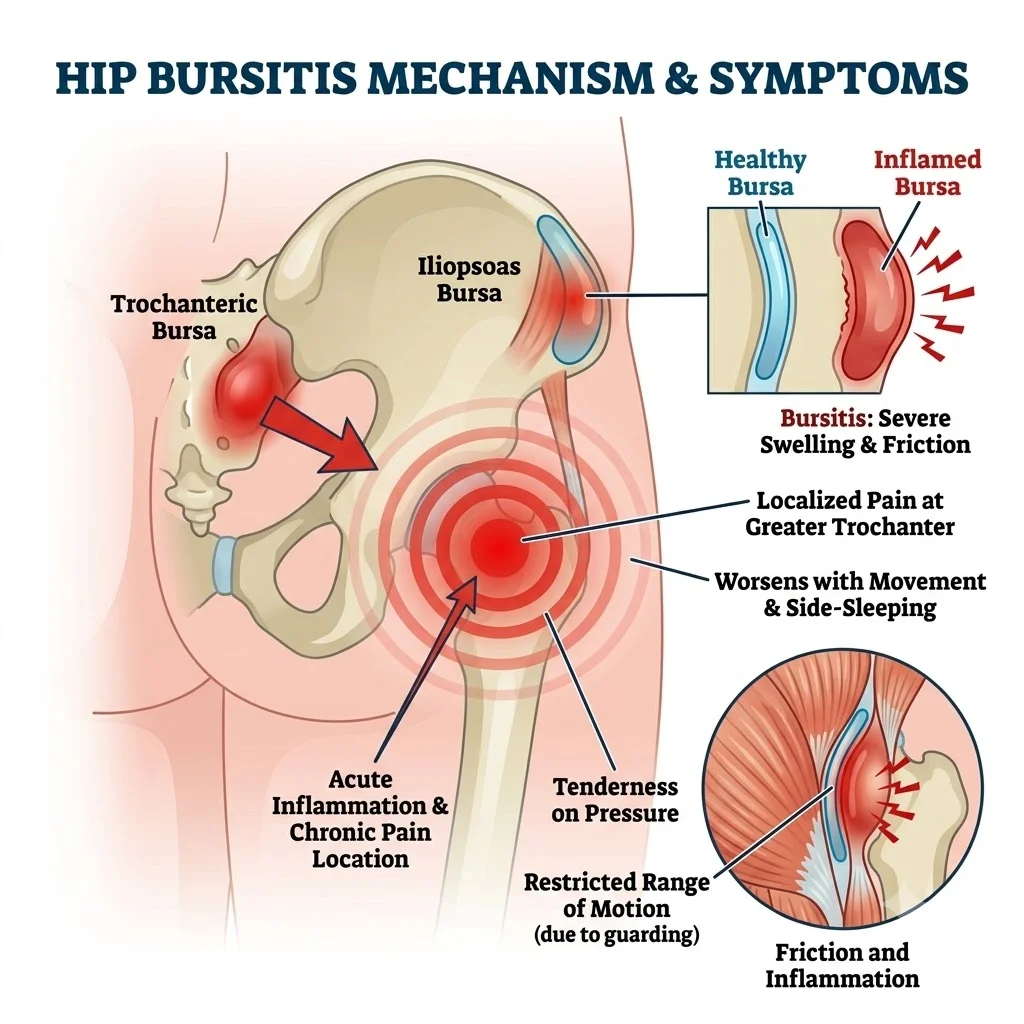
Hip pain can come from structures around the hip, including muscles, tendons, joints, and other tissues. Pain may also be experienced around the groin, outer hip, buttock, thigh, or lower back.
Common symptoms can include:
- Hip pain
- Groin discomfort
- Outer hip pain
- Hip stiffness
- Reduced hip mobility
- Pain when walking
- Pain climbing stairs
- Pain while sitting
- Pain during exercise
- Difficulty running
- Muscle weakness
- Reduced balance or movement control
The location and behavior of pain can provide useful information, but a proper assessment is important to understand the factors contributing to your symptoms.
Common Hip Problems We Help With
Hip Osteoarthritis
Hip osteoarthritis can cause pain, stiffness, and reduced mobility that may affect walking, stairs, exercise, and everyday activities.
Physiotherapy for hip osteoarthritis may focus on:
- Maintaining hip mobility
- Improving strength
- Building activity tolerance
- Improving functional movement
- Modifying activities when appropriate
- Supporting continued physical activity
Exercise and rehabilitation are commonly important components of conservative management, with the specific program tailored to the individual.
Hip Bursitis and Lateral Hip Pain
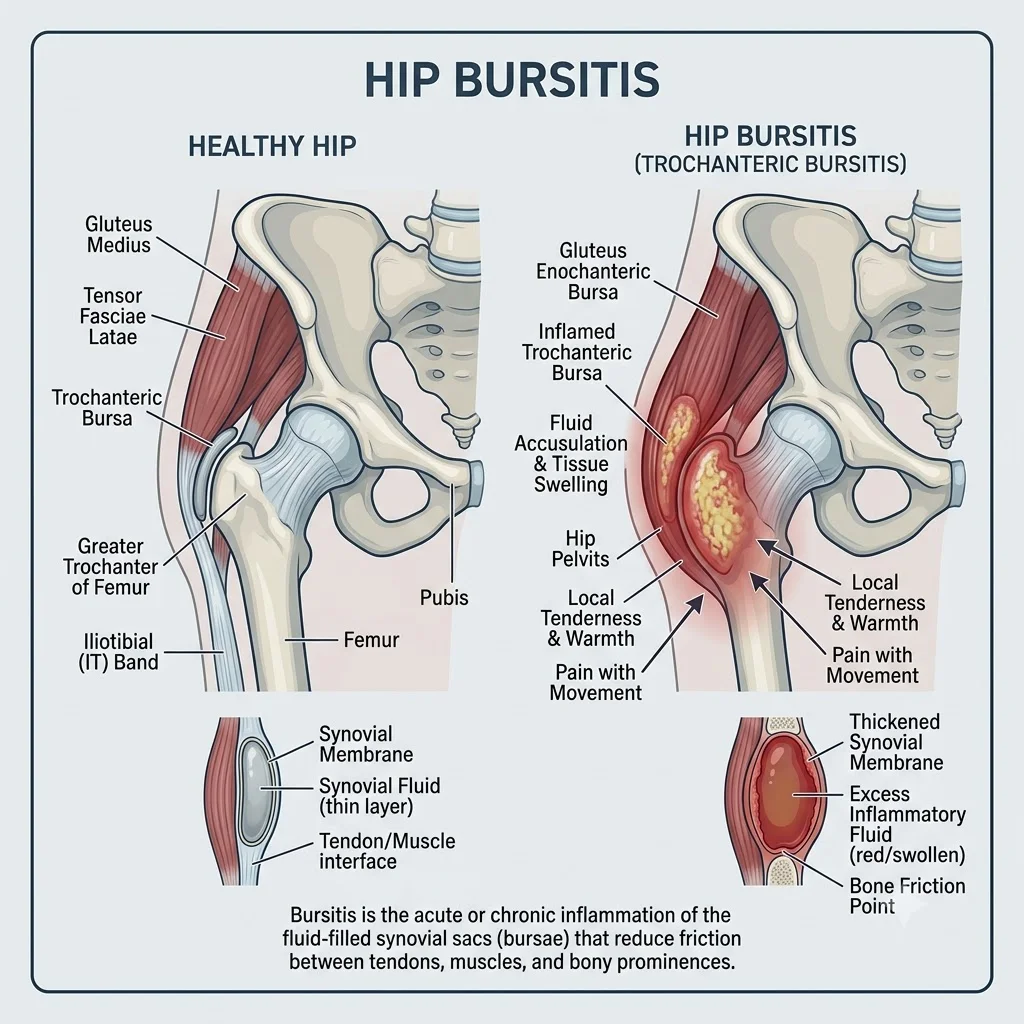
Pain around the outside of the hip may be associated with irritation of structures around the greater trochanter, often described as lateral hip pain or greater trochanteric pain syndrome.
Hip bursitis treatment physical therapy may involve assessment of:
- Hip strength
- Load and activity levels
- Movement patterns
- Hip mobility
- Lower-limb function
- Exercise and sporting demands
Rehabilitation may include progressive strengthening, movement modification, education, and appropriate mobility work.
Hip Labral Tears
A hip labral tear involves the labrum, a structure around the hip socket.
Symptoms can include hip or groin pain, clicking, catching, stiffness, or difficulty with certain movements.
Hip labral tear physiotherapy may focus on:
- Hip and core strength
- Mobility
- Movement control
- Functional capacity
- Activity modification
- Gradual return to exercise
Some people may undergo surgical management, while others may receive conservative rehabilitation depending on their condition and medical assessment.
Femoroacetabular Impingement (FAI)
Femoroacetabular impingement, or FAI, involves the interaction between the bones of the hip joint that can contribute to pain or restricted movement.
Symptoms may include:
- Deep hip or groin pain
- Pain with prolonged sitting
- Discomfort during squatting
- Pain with certain sporting movements
- Reduced hip mobility
Physiotherapy can assess movement, mobility, strength, and activity demands and develop an individualized rehabilitation program.
Hip Flexor Strain
Hip flexor strains can occur during running, sprinting, kicking, jumping, or other activities involving rapid or forceful hip movement.
Rehabilitation may include:
- Symptom management
- Gradual loading
- Hip strengthening
- Core strengthening
- Mobility exercises
- Running or sport-specific progression
Hip Flexor Strain Recovery Time
Hip flexor strain recovery time varies according to the severity of the injury, symptoms, previous injuries, physical demands, and response to rehabilitation.
Rather than relying on a fixed recovery timeline, rehabilitation can be progressed according to appropriate functional milestones and tolerance to activity.
Hip Tendon Problems
Tendons around the hip can become painful following changes in activity or repeated loading.
Physiotherapy may focus on:
- Progressive strengthening
- Load management
- Mobility
- Movement control
- Activity modification
- Gradual return to exercise
Sports and Gym-Related Hip Injuries
Running, cycling, weightlifting, jumping, kicking, and other sporting activities can place significant demands on the hip.
Sports-related hip rehabilitation may address:
- Muscle strains
- Tendon problems
- Hip mobility restrictions
- Strength deficits
- Movement control
- Training-related overload
- Return-to-sport requirements
Hip Mobility Restrictions
Reduced hip mobility can affect squatting, walking, stairs, running, exercise, and other functional movements.
A physiotherapy assessment can identify relevant mobility restrictions and determine whether mobility exercises, strengthening, movement retraining, or other approaches may be appropriate.
Hip Pain and Lower Back Problems
Hip and lower-back symptoms can sometimes occur together.
Movement limitations, strength deficits, or changes in how the hip and lower back work during activities may contribute to symptoms.
Your physiotherapist can assess the hip, lower back, and surrounding movement patterns to better understand your functional limitations.
How We Assess Hip Pain
Your hip physiotherapy assessment may include:
- Your symptoms and medical history
- Pain location and behavior
- Hip mobility
- Muscle strength
- Hip and lower-limb movement
- Balance
- Walking
- Squatting and functional movement
- Exercise requirements
- Sporting demands
- Previous injuries or surgery
- Your rehabilitation goals
The assessment helps guide an individualized treatment and exercise plan.
Physiotherapy for Hip Bursitis & Lateral Hip Pain
Lateral hip pain can sometimes be aggravated by walking, running, climbing stairs, lying on the affected side, or increasing physical activity.
Rehabilitation may include:
- Hip strengthening
- Progressive loading
- Movement education
- Activity modification
- Lower-limb strengthening
- Mobility exercises where appropriate
- Gradual return to normal activities
The exact approach depends on the individual’s symptoms and assessment.
Treatment for Femoroacetabular Impingement and Labral Tears
FAI and labral-related hip symptoms can affect activities such as squatting, sitting, running, and sports.
Physiotherapy may focus on:
- Hip and trunk strength
- Movement control
- Mobility
- Functional exercise
- Activity modification
- Progressive return to activity
Hip Impingement Exercises
There is no single exercise program suitable for everyone with hip impingement.
Exercises should be selected according to your symptoms, hip mobility, strength, functional limitations, and activity requirements.
A physiotherapy assessment can help determine which movements and exercises are appropriate for your condition.
Hip Flexor Strain & Groin Injury Recovery
Hip and groin injuries can occur during running, kicking, jumping, changing direction, or other high-demand activities.
Rehabilitation may progressively address:
- Pain and symptoms
- Hip mobility
- Strength
- Core control
- Running
- Direction changes
- Sport-specific movements
The progression depends on the injury and your response to rehabilitation.
Post Hip Replacement Physiotherapy in Newmarket
Hip replacement surgery is followed by a period of rehabilitation focused on restoring movement and function.
Post hip replacement physiotherapy may address:
- Hip mobility
- Strength
- Walking
- Balance
- Functional movement
- Stairs
- Daily activities
- Gradual return to exercise
Post-operative rehabilitation should follow the surgeon’s instructions and any applicable precautions.
Hip Physiotherapy for Active Adults
Hip pain does not only affect athletes. It can also affect people who walk regularly, exercise at the gym, work on their feet, or simply want to remain active.
Rehabilitation can be tailored to activities such as:
- Walking
- Running
- Cycling
- Strength training
- Hiking
- Recreational sports
- Everyday household activities
Hip Rehabilitation for Runners
Running places repetitive loading demands on the hip and lower limb.
If hip pain is affecting your running, your physiotherapist may assess:
- Training volume
- Recent changes in training
- Hip and lower-limb strength
- Mobility
- Balance
- Movement patterns
- Previous injuries
- Running requirements
A progressive rehabilitation and return-to-running plan can then be developed according to your individual needs.
Hip Rehabilitation for Sports
Sports such as soccer, hockey, tennis, running, cycling, and other activities can place different demands on the hip.
Sports rehabilitation may progressively address:
- Strength
- Mobility
- Balance
- Coordination
- Running
- Jumping
- Landing
- Acceleration
- Deceleration
- Direction changes
- Sport-specific movement
Our Approach to Hip Pain Physiotherapy
Comprehensive Hip Assessment
We begin by understanding your symptoms, history, activity level, movement, and goals.
Mobility Rehabilitation
Appropriate mobility exercises can help address movement restrictions that are relevant to your functional limitations.
Strength and Stability Training
Progressive strengthening can improve the capacity of the hip and surrounding muscles for everyday and sporting activities.
Movement Retraining
Your physiotherapist may work with you on functional movements relevant to walking, stairs, exercise, work, or sport.
Manual Therapy
Manual therapy may be incorporated when appropriate as part of a broader rehabilitation program.
Exercise-Based Rehabilitation
A personalized exercise program can address mobility, strength, balance, coordination, and functional capacity.
Progressive Return to Activity
Your rehabilitation can be progressively adjusted as your symptoms, strength, mobility, and activity tolerance change.
Hip Pain and Everyday Activities
Hip pain can make simple activities more difficult, including:
- Walking
- Sitting for long periods
- Getting in and out of a chair
- Climbing stairs
- Getting into a car
- Putting on shoes
- Squatting
- Exercising
- Sleeping comfortably
Physiotherapy can focus on improving the movement and physical capacity needed for your individual daily activities.
When Should You See a Physiotherapist for Hip Pain?
A physiotherapy assessment may be appropriate if you experience:
- Persistent hip pain
- Hip stiffness
- Groin pain
- Outer hip pain
- Pain while walking
- Pain climbing stairs
- Pain during exercise
- Recurrent hip injuries
- Reduced hip mobility
- Difficulty returning to sport
- Ongoing symptoms after surgery or injury
Significant trauma, inability to bear weight, severe pain, or other concerning symptoms may require appropriate medical assessment.
Can Physiotherapy Help Hip Pain?
Physiotherapy can help manage many hip-related musculoskeletal conditions by addressing relevant factors such as mobility, strength, movement, activity tolerance, and functional limitations.
The appropriate approach depends on the underlying condition and individual assessment.
Can Physiotherapy Help Hip Osteoarthritis?
Physiotherapy can form part of conservative management for hip osteoarthritis.
Treatment may include therapeutic exercise, strengthening, mobility work, activity guidance, and functional rehabilitation.
The goal is to help you maintain or improve physical function and participate in activities that are important to you.
Can Physiotherapy Help Hip Bursitis?
Physiotherapy may help manage lateral hip pain by addressing relevant factors such as strength, activity loading, movement, and functional capacity.
An individualized assessment is important because pain around the outer hip can have different contributing factors.
Can Physiotherapy Help a Hip Labral Tear?
Some people with hip labral tears may benefit from conservative physiotherapy, while others may require further medical or surgical assessment.
Physiotherapy can focus on strength, mobility, movement control, activity modification, and functional rehabilitation when appropriate.
Hip Pain Physiotherapy in Newmarket
RehabDNA Physiotherapy provides personalized physiotherapy and rehabilitation in Newmarket, Ontario.
Our approach combines assessment, individualized treatment, therapeutic exercise, movement rehabilitation, and education according to your condition and goals.
RehabDNA Physiotherapy
455 Harry Walker Pkwy S Unit 7
Newmarket, ON L3Y 8T3
Canada
Phone: +1 (905) 509 8469
Email: Info@RehabDNA.com
Why Choose RehabDNA Physiotherapy?
Personalized Hip Rehabilitation
Your rehabilitation plan is based on your symptoms, physical abilities, lifestyle, activity level, and goals.
Experienced Physiotherapists
Our Registered Physiotherapists have clinical backgrounds in musculoskeletal rehabilitation, sports physiotherapy, rehabilitation, and functional care.
Active Rehabilitation
Exercise and movement are important components of rehabilitation, helping address strength, mobility, coordination, and function.
Progress-Focused Care
Your rehabilitation can be adjusted as your symptoms, abilities, and functional requirements change.
Newmarket Location
RehabDNA Physiotherapy is located at 455 Harry Walker Pkwy S Unit 7, Newmarket, Ontario.
Book Hip Pain Physiotherapy in Newmarket
If hip pain, stiffness, weakness, or reduced mobility is affecting your walking, work, exercise, sport, or everyday activities, RehabDNA Physiotherapy can assess your condition and develop a personalized rehabilitation plan.
Book your hip pain physiotherapy appointment in Newmarket and take the next step toward better movement and function.

Science of Recovery

